
26 Nov 2026
The Grant Pays for the Build. Nothing Pays for Year Three.
If you are about to sign off on a grant-funded community network, free public internet for neighbourhoods that cannot otherwise afford it, the thing most likely to kill it is not in the technology. It is in the budget you are writing right now. I can show you exactly how that happens, because it has happened here.
Hidalgo County's free rural Wi-Fi is off, and the families who were relying on it have no internet, because nobody budgeted the long tail. The county paid to get the network built with COVID relief money, and that part worked. What was never built alongside it was a program to keep the network running for the next three, five or ten years, and that is pretty tough to swallow.
This is also not a network that broke last week. By my count, as someone who works on these networks here, the equipment has gone roughly three years without maintenance, which means it aged out in plain sight before anyone called it a failure.
What "the long tail" actually means on an invoice
When I say the long tail, I mean the part of a community network that nobody puts in the bid package. That includes maintenance; administration; pole attachment rights, which are the legal permissions and recurring fees a utility charges you for hanging your equipment on its poles; firmware updates, which are the software patches that keep the radios working and secure; the security work around those updates; and the crews who climb up and physically fix the thing when it stops working.
It is the line item that decides whether a ribbon cutting turns into a utility or into a few hundred dead radios on streetlights.
This matters to anyone outside the Rio Grande Valley who is about to spend grant money on a community network, because the failure mode here is not technical. It is contractual and organisational, and it shows up two or three years after the ribbon cutting, long after the people who approved the spend have moved on. The residents who feel it are the ones who were doing homework, filing job applications and taking telemedicine appointments on that signal, and for them it has gone dark. LUPE, the community group pressing the county to restore the service, has made clear that people were already relying on it, even when the signal barely made it inside.
So here is what it actually takes to switch a network like this back on: who owns it, what the physical plant audit involves, where the operating money comes from, and what coverage in a colonia, one of the unincorporated, often under-served rural settlements along the Texas border, physically requires.
The county picked a good contractor, and that was the problem
I should disclose my own stake here: my company bid on this work and came in second. The vendor the county chose is actually really good. They are just not in our community and not from our community, and they ended up calling me to see if I would help them implement the network.
What you lose with an outside award is buy-in, and buy-in is not a soft thing. It is the difference between a network that has someone watching it and a network that quietly stops working while everyone assumes somebody else owns it. Buy-in is why I bid at all: my family has been down here since 1904, and I have no plans to leave.
Ongoing support is not just a cost line. It is the people involved and the crews involved, and it is being able to pick up a phone call on a Thanksgiving morning and help troubleshoot something. That holds whether the network is Wi-Fi, 5G or fiber, and in every case you have to have a community organisation behind it.
Switching it back on means auditing the poles before the radios
What the county has now is infrastructure with aging equipment on it and three years of deferred maintenance, so getting it back up will be tough.
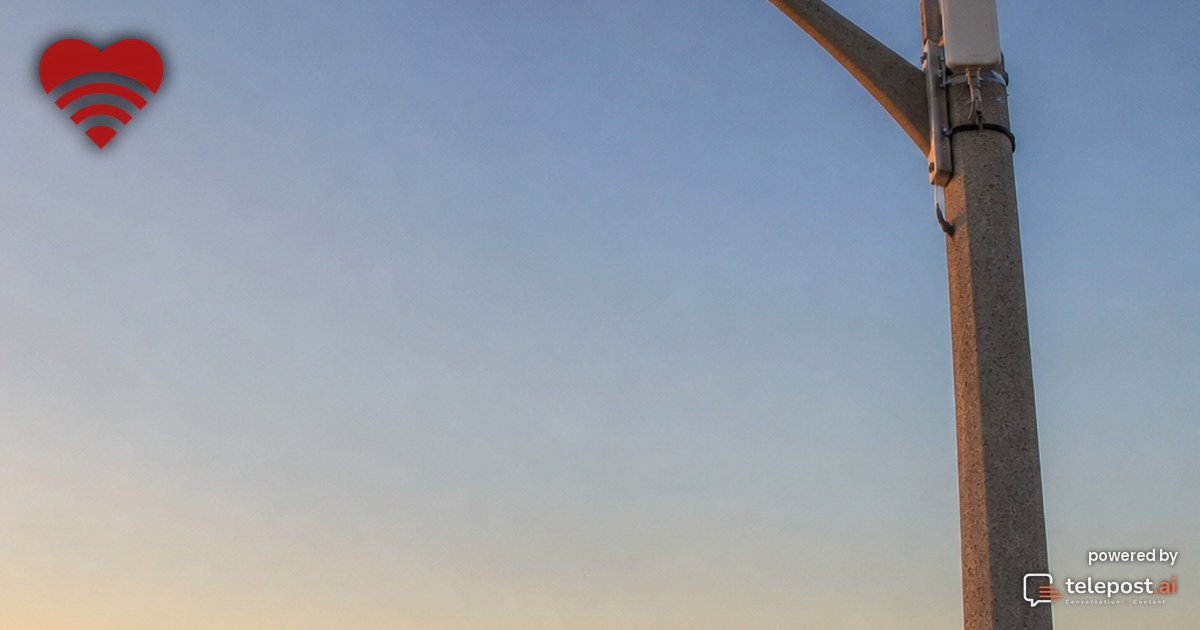
Here is the part that surprises people who have not done this work. Every access point, the box that broadcasts the Wi-Fi signal, sitting on a streetlight probably means maintenance on the streetlight itself, on the cobra head arm (the curved metal arm that holds the light fixture out over the road) and on the photovoltaic or light sensor that switches the lamp on at dusk. Someone has to confirm all of that is working before the radio even matters.
Then there is the paperwork nobody enjoys. You cannot leave equipment on a utility provider's pole without them charging you for the electricity and for the attachment, so going back to review this is cumbersome. The questions that have to be answered first are:
- How many poles were used, who owns them and where they are.
- What the attachment rights actually say.
- Whether anyone is paying for electrical service, or whether there is an agreement with the local utility.
- How the devices are connected, and whether they sit on a county network or their own.
- Who is providing the security and the firmware updates.
Security is the piece I would not compromise on. Those devices need to be updated, maintained and running, or else you are not really doing a service to the community by allowing them to connect to an unsecured network, one where the equipment has not been patched against known vulnerabilities. None of this is insurmountable, but it needs an owner rather than a budget line.
The expensive part is the truck, not the expertise
I have already sent an email volunteering to help get this back up, and I would do it even if it does not make me money, because it is the right thing to do for our community and you cannot exchange that for a price tag. I can think of plenty of organisations and people here who would help. What I cannot promise is that skilled, trained workers will do all of it at no cost, because this work genuinely requires people who understand how these networks operate.
It doesn't cost anything for me to go and sit down and teach someone how to replace a piece of equipment. What costs is the fuel and the truck and the workers that will go up in the truck and the insurance to cover it. Cities and counties in these communities already have bucket trucks, the lift vehicles crews use to reach streetlights, and the crews to operate them, so the cheapest path is to bring in outside expertise to train the people who already own the equipment. The hard cost that remains is the hardware itself, unless a vendor donates, or we find older-generation gear that is still current enough to update and put back into service.
The ongoing operating money can also come from somewhere other than the general fund. Advertising on the network, banks or financial institutions helping offset the cost, and the utility provider agreeing to relieve some of the pole attachment burden would all go a long way. With the right mix of a public-private partnership, public assets and private money or labour sharing the load, and a little bit of funding, somebody can afford to employ the people who keep it alive.
The light bulb test sets expectations better than any coverage map
People think that Wi-Fi just magically works through all the walls and through the windows and everything, and it actually doesn't. The number that blows people away is 500 feet or so outdoors from an access point, and indoors it is less, which means outdoor access points spaced more than 500 feet apart are not really helping anyone out.
South Texas makes that harder than a design tool suggests. There are houses made of brick, houses made of wood, plaster with chicken wire, drywall with aluminum framing, and out in the rural areas you build with whatever materials you have, so one room might be brick and the next drywall. Metal and wire mesh in particular block the signal. You have no idea what you are going to get into until you are standing in it.
So I explain it with a light bulb. Stand in the room where you want the signal, look for the streetlight the access point is mounted on, and if you cannot see the light from there, you will not get the Wi-Fi either. That is a far more honest promise to a resident than a green circle on a coverage map.
Before you sign anything
If you are a county official about to award a community network, three things belong in the decision before the build starts:
- Budget maintenance, administration and operations before the build, not after the ribbon cutting.
- Audit the physical plant first: how many poles, who owns them, and what the attachment rights and electrical agreements actually say.
- Name an owner, city, nonprofit or local company, who holds ongoing operations and answers the phone.
And the questions I would put to a vendor or a project sponsor before a contract is signed:
- Who pays the pole attachment fees and the electric bill in year four, and is that in writing?
- Who applies firmware and security updates, how often, and what happens if they stop?
- Which named organisation answers the phone when something breaks on a holiday weekend?
- What is the replacement plan and budget for hardware that ages out, and has anyone asked a vendor about donations or refurbished-but-still-supportable gear?
- Are we training the crews who already own the bucket trucks, or paying someone to drive in every time?
- What did the coverage claim assume about building materials, and has anyone stood inside a representative home to check it?
If your own award has not closed yet, the single most useful thing you can still do is get the maintenance, the attachment rights and the electrical obligations into the bid package, where they are somebody's contractual duty rather than somebody's problem three years from now.
A light bulb is a fairer promise to make to a family than a map with a green circle on it. Keeping that promise three years after the ribbon cutting is the long tail, and it is the part nobody budgets.
Want this kind of thing weekly, in audio? That's the show.