
16 Oct 2026
A Texas Law Handed Parents a Weapon Against School Librarians. Here's What Happened When We Used It as a Shield Instead.
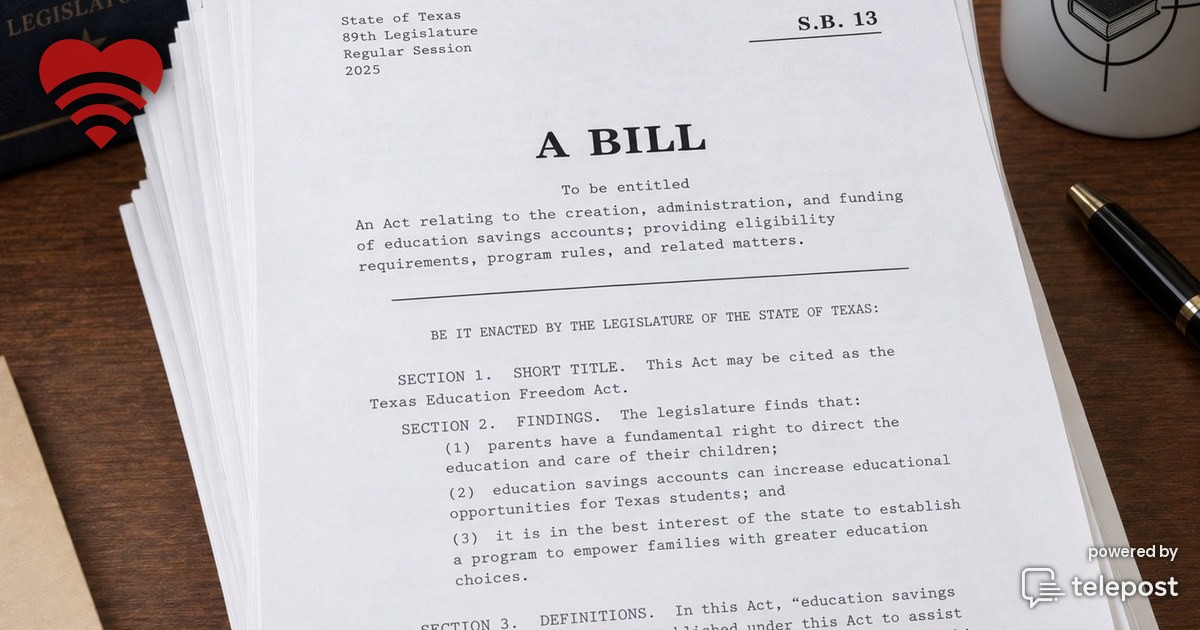
I spend most of my working life in wireless networks, not school policy. But I'm also a parent in McAllen, Texas, and I chair something called a SLAC, a School Library Advisory Council. That's a group of parents and educators that Texas law now requires districts to be able to form, to review which books belong in school libraries and advise the elected school board on what to approve or remove.
Here's why this should matter to you even if you have no connection to a school district: a state law created a mechanism, the mechanism was designed with a very specific assumption about how communities would use it, and the communities got to decide whether that assumption held. Ours didn't hold. That's a story about institutional design and how much discretion ordinary people actually have inside a system handed to them. It's also a story about what happens to skilled professionals when you make them afraid of their own job description.
Yesterday I watched The Librarians, Kim Snyder's documentary about the people on the front line of the book-ban fights in Texas and across the country. It was gut-wrenching. Librarians losing their jobs, people trying to get them arrested, grown adults standing at school board podiums accusing educators of distributing child pornography. Watching it, it hit me that what we've built in McAllen looks nothing like what's happening almost everywhere else.
How does a council built to second-guess librarians end up full of people who trust them?
When we first heard McAllen ISD would have a SLAC, it honestly came as a shock. We didn't think of ourselves as a community that needed to put oversight on its librarians. It started with a petition from within our own district, and Texas's SB 13, Senate Bill 13, the 2025 state law that governs how school library materials get reviewed, gave it the force of law.
The people who raised their hands didn't do it to ban books. We did it to stand up for our community. I volunteered because it felt like the right thing to do, and the council later made me chair.
That made our first meeting a little strange. Everyone was quietly sizing up the room, trying to figure out who was there to pull books, and it turned out nobody was. A council built to second-guess librarians ended up full of people who trust them, enough that we walked through the degrees and certifications it takes to become one, just to understand the job from their side.
Our first homework was reading SB 13 line by line: what our role was, and where our boundaries stopped. We came out with more questions than answers. The law clearly had a purpose, but plenty of it wasn't thought through.
We don't always agree. We've had real debates, long ones, and every one of them is on the public record, posted on the district website for anyone to listen to. We argue every point to the end because the goal is the best decision for our kids.
Our council actually looks like McAllen. Each voting member is a parent appointed by a trustee, an elected member of the school board, to represent the community, and we do: lawyers, doctors, IT professionals, people from the museum and arts world, local business owners. We come from different backgrounds and income levels, and we vote differently. Our non-voting members include retired librarians and active middle and high school librarians, so the people who do the work are in the room when we talk about it. When we make a call, it is the community's voice making it.
What was covering my son's classroom bookshelf?
One of the first things we pushed for was uncovering the classroom libraries in our elementary schools, the small book collections teachers keep inside their own rooms, separate from the main school library. This one was personal.
My son was just starting third grade when he walked into his classroom and found butcher paper covering the bookshelf where the books were supposed to be. We'd moved him to public school in the first place because his private school got on him for reading after he finished a test. We wanted somewhere that would encourage him to read more, and here was a wall of paper.
Elementary kids were being punished for fights happening at the middle and high school level. Our first memo to the board recommended reopening those classroom libraries, and they reopened district-wide. Everyone on our council has a story like that, and that is why we showed up.
Why call a weapon a shield?
Here is the first thing the documentary made clear.
SLACs were handed to communities as a weapon. The assumption behind them was that parents would use them to second-guess, belittle, and berate the librarians in their schools. In McAllen, we turned it into a shield.
The film is about a handful of loud, well-organized people bullying school boards, people willing to film their own kid giving a presentation and post it for clout. That is not who shows up in McAllen. What shows up is a room full of parents, educators and neighbors saying that we trust our librarians, we trust our teachers, we trust our students to make choices, and we trust our parents.
That is the shield. When it isn't one or two angry voices at the podium but a whole community speaking together, it protects everyone behind it: librarians, teachers, students, the school board, the district. Our first recommendations to the board were to approve the librarians' purchase list of more than 800 books, and today we are past 2,000 new books approved. That is what trust looks like on paper.
What is actually happening inside a school library?
At our most recent meeting I asked our director of library services if I could tour every library in the district, and she jumped at it. I have now been to all of our high schools and most of our middle schools and elementaries.
Here's what surprised me: books are maybe 30% of the job. Librarians are doing tech support, troubleshooting devices and resetting forgotten passwords. They run makerspaces, hands-on workshop areas with tools and materials for building things, and esports programs. They are the hub for testing and trainings.
They are also caretakers. I saw libraries stocking feminine hygiene products, because things happen when you're a teenage girl. I saw a food pantry next to a library where kids who don't get full meals at home can take something with them. I saw racks of clothes so a student can dress up for a job interview or an important meeting.
For a kid having a rough time at home, with friends, or with figuring out who they are, the library is the quiet place to go, an oasis in the middle of whatever chaos they are dealing with, and I'd honestly never stopped to think about that. There are common spaces, coffee makers and lounges to sit and chat quietly with your friends. There are self-checkout kiosks so you can move in and out at your own pace, podcast studios, TVs playing the news, and every once in a while an incredible book fair that makes you feel like a kid again just walking into it. All this energy and anger is aimed at a fraction of what these people do.
Why are our librarians scared?
The second thing I didn't fully understand until I sat down with our librarians face to face is that they are afraid, and not only for themselves. They are scared for their jobs, for their aides and for their students.
An elementary teacher might have one class; I saw an elementary librarian who sees over 12 classes per day and treats them all as her own. When you are spending your day seeing 12 classes of 25 students, the thought that you have to go through and weed your collection, review it title by title and pull anything questionable, of 12,000 books because some politician had an issue with a title seems absurd.
Every librarian I've talked to, at every grade level, tells me the same thing. They don't know whether putting a book on a shelf, even one that follows every policy the board has set, will get them in trouble with their principal, the school board, the superintendent, a parent or the state. Nobody is sending them anything positive. It is all loud, noisy fear, and it pushes them to make decisions out of fear instead of doing what they're trained, paid and passionate about.
Here is the part that should stop you cold: they are doing it for less. McAllen high school librarians earn in the mid-$60,000s, and by most accounts that is around $10,000 less than librarians make in several surrounding districts. A librarian here could cross a district line, earn more, and never deal with a SLAC at all. They stay anyway. That tells you how much they care, and it tells you how badly we would miss them if the fear finally pushed them out.
The fear doesn't land the same way on everyone, either, and I saw it break differently depending on where someone was in their career. The newest librarians, only months into the job, have never known anything else, so this climate is just normal to them. The mid-career ones remember how it used to be and are scrambling to figure out how to live with the change. The veterans near the end are quietly opting out, because retirement is close, so they'll keep their heads down, go with the flow, and let someone else carry the fight.
One librarian told me, plainly, that she didn't have the fight left in her. That one stayed with me. Here's a person who gave her whole career to something she loves, worn down to the point of surrender.
The real choice in front of them is brutal: comply, quit and walk away from a pension and retirement they've spent decades earning, or pack up and move to a district that doesn't put them through this. So they stay, and they go along with it. If they were applying for this job today and saw what it had become, some of them might make a different call, but they're already in it, so they adapt. The net effect isn't that they stop wanting to do the work. It is that the fear quietly bleeds some of the passion out of them, and that passion was the whole reason they were good at it. That is the quiet cost nobody pushing this ever has to see.
The scariest part to me is that it's the students who get affected by this, because their librarians' fear to do their job can directly impact my children. A conversation that could spark a love for reading and discovery doesn't happen. A book recommendation is held back, keeping them from realizing where humanity has been and forcing them to relearn lessons long since passed. An opportunity to smile, to laugh out loud or even to cry falls by the wayside, and all because of politics.
The rollout didn't help. There was a lot of misinformation and confusion, and the state's political machine made the water murkier. When state leaders stand at podiums promising to come for the books, that lands hard on people whose jobs depend on those books. Then librarians got about a month between the bill passing on June 2, 2025 and the first day of school on August 11 to review their entire collections, a timeline that tells you whoever wrote it never worked in a school.
Here in McAllen, as far as I know, our librarians haven't faced the threats of violence or the firings the documentary shows. But I'm on the outside looking in, and I don't know everything each of them has been through. The film shows exactly how it happens elsewhere, where a few very vocal, very well-funded, very angry people can take someone excellent at their job and turn the whole town against them. As parents, we trust these people with our kids more hours a day than we spend with them ourselves, and some folks' answer is to threaten their jobs and make their workplace hostile. Imagine what kind of teacher someone becomes when they're working out of fear.
Who is actually driving this?
Part of what the documentary showed me is ugly. Some of the people leading these fights aren't doing it because it affects their own kids. They're doing it for attention. There are PACs, political action committees, organizations that raise and spend money to influence elections, and organized groups funding campaigns, and once someone gets a little limelight and a few viral clips, they'll do whatever keeps it coming. The more salacious, the more clicks.
We've seen it here, too. Flyers have shown up in McAllen mailboxes, and outside money is flowing into our area to change how parents and students think so someone can win office, whether that is a school board seat, a congressional district or the governor's mansion. When the only way a team can win is through fear, it is no surprise that fear eventually lands on our librarians.
Wrapping that in God or politics doesn't change what it is. Banning books and punishing the people who share them has a long history, and every story we've read about it ends the same way, with those people on the wrong side. It never works out for them, and the suffering in between is what's avoidable. What gets me is that I honestly think many of them haven't spent much time in a library. They don't know what that safe space feels like, or what it means to discover something on your own, and they don't understand that this never works in favor of the aggressor in the long run. That's the hardest part to reconcile.
Why does the room itself matter as much as the books?
I remember going into libraries as a kid. If I had an idea, I could go find a book about it. Later, at UT Pan Am, I'd wander the stacks reading about engineering, how things get built, why people thought the way they did.
The book was only half of it, and the other half was the space. A library is a place where you can chase an idea without anyone looking over your shoulder. A kid trying to figure out where they fit, or what's going on inside them, can check out a book with some anonymity, curl up somewhere safe and think, with nobody forcing their will on them.
When I worked at Amazon, the culture ran on writing, narratives rather than slide decks, and the reason was simple: reading makes the reader do the thinking. A picture, a video or a podcast hands you the conclusion. Reading makes you build it yourself, add your own thoughts and sit with it. That quiet, almost meditative work is how we figure out who we are, what we're capable of, and how we ought to treat each other. That's what's under threat right now, not just books, but the safe space school libraries create.
At the end of the day this comes down to something basic. America was built on independence of thought, the freedom to be who you are and become who you want to be, and equal access to ideas is how people get the tools to contribute. That's what our SLAC is working toward. Nobody on it is trying to villainize anyone for how they think, how they were raised, what religion they are, who they love or how they vote. We're trying to make sure every kid in McAllen has equal access to educational materials. That's not partisan, that's the deal.
So what?
Watching The Librarians showed me an ugly side of what is happening in Texas, and it also showed me how lucky I am in my own community, my school board and our librarians. We took something designed to punish schools and used it to protect them.
To every librarian in McAllen ISD: we trust your judgment, your education, and the degrees, certifications and countless hours behind every book on your shelves. Serving on this council is our way of saying it out loud, and of giving you a voice where you didn't have one, or making the one you have even louder. I've never been more proud of work I've been part of.
We know it's a risky stance in a year like this one in Texas, and we'll probably be targeted for it, but we know we're on the right side. We've read what happens to the people on the other side. And know this: our community has your back. Those attacks will land at our feet before they can get to you, and we will fiercely protect you.
Do this
- If you're a parent, book an appointment, walk into your kid's library, and ask the librarian what they need. You'll walk out seeing it differently.
- Ask your district whether it has a SLAC, who sits on it, and how members are appointed. If it has one, show up.
- Listen to the recordings of your SLAC's meetings, in our district they're posted publicly on the website, and yours may be too.
- Ask what your district pays its librarians compared with neighboring districts, and whether it's losing them.
- Ask how much review time your librarians were actually given, and what they had to pull to meet the deadline.
- Tell your librarians you've got their back.
A shield only works if enough people pick it up.
I'm writing as a McAllen ISD parent and as chair of our SLAC, and this one is personal. These views are my own, not an official position of the council, the Board of Trustees, or McAllen ISD.
Want this kind of thing weekly, in audio? That's the show.