
14 Sep 2026
Cambium's radios will outlive the company: The last great thing they can do is open up the hardware & software.
▶ Listen to this article — read by Drew
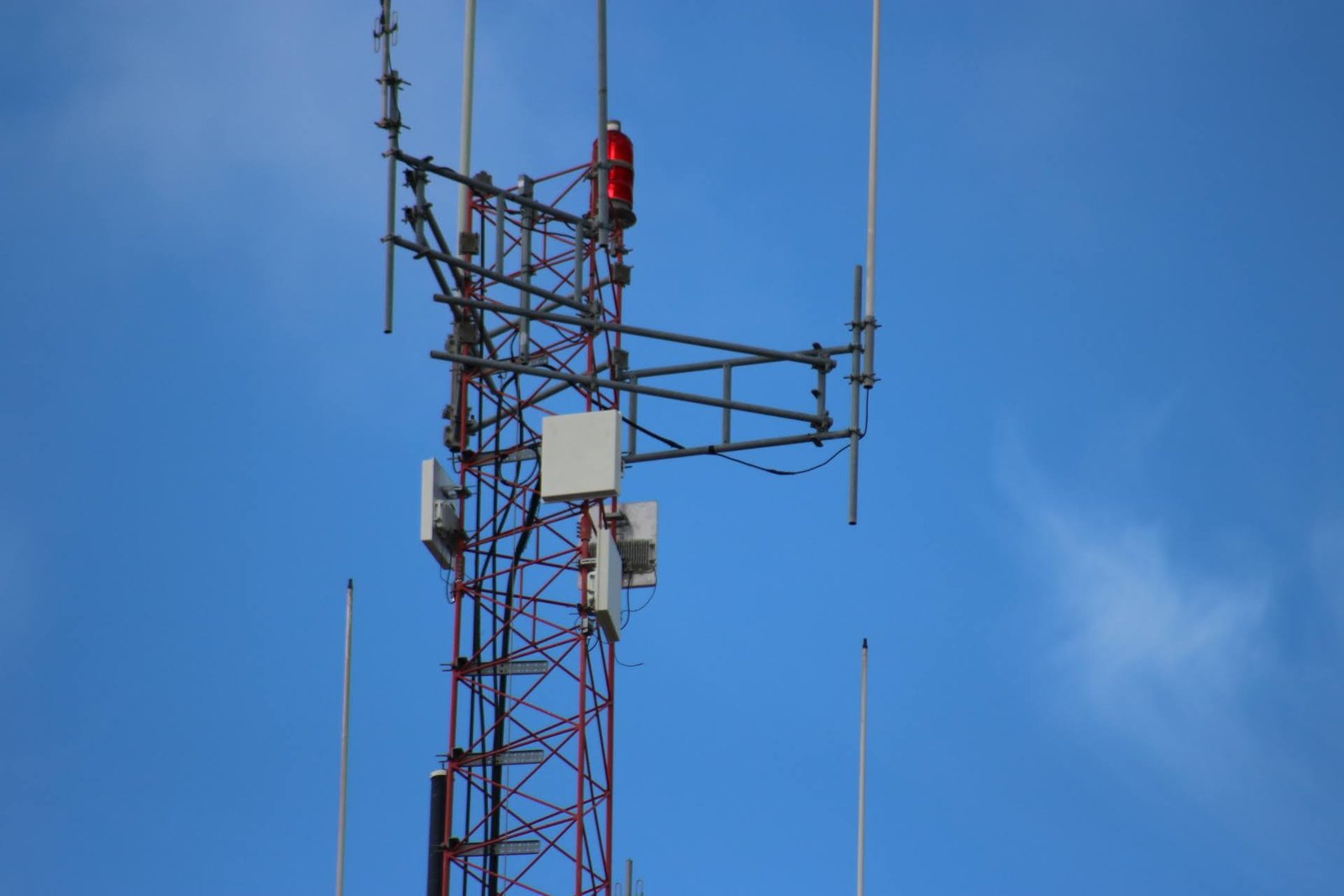
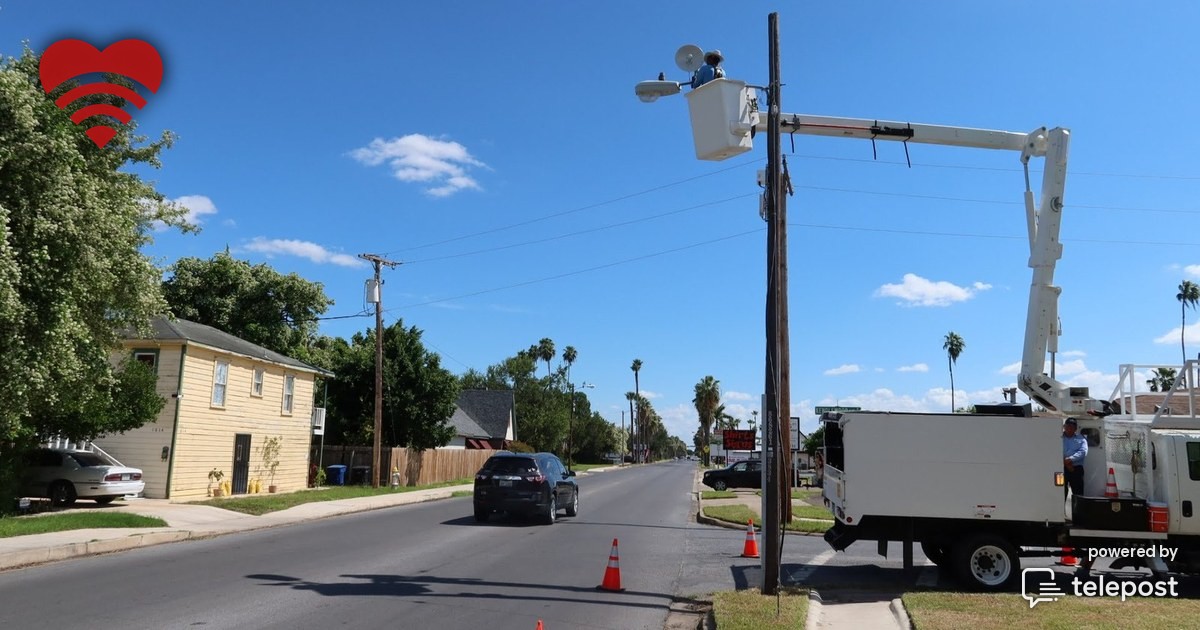
Somewhere right now there's a sector on a tower doing exactly what it did yesterday, a backhaul link holding at five nines through weather that should have dropped it, and an AP on a light pole handing off a client who has no idea any of this is happening. None of that hardware knows what's going on with the company that built it.
That gap, between equipment that works fine and a vendor that doesn't exist anymore, is the whole story here. It's what every operator, integrator, and municipal IT shop running Cambium is going to be staring at this week, and it's a solvable problem if the right people make one decision in the next few months.
I've spent close to thirty years in this industry and I've put a lot of Cambium in the air, so let's talk about what's actually happening, what it means for your network, and what I think should happen next.
What do we actually know?
Let's be precise about what's documented, because there's a lot of rumor flying. On 10 September 2026, Cambium Networks Limited, the England-registered entity the group operates under, filed a Notice of Intention to appoint an administrator, and ISPreview confirmed the filing independently. Once a company enters administration it's generally shielded from creditor action while the administrators figure out what can be sold, salvaged, or wound down.
That follows a rough eighteen months. Trading in the ordinary shares was suspended at the open on March 27, 2026 after the Nasdaq Hearings Panel determined to delist. Cambium appealed, got current on its SEC filings in May, and on August 25, 2026 the Nasdaq Listing and Hearing Review Council affirmed the delisting. The appeal is finished.
There's chatter about pieces of the fixed wireless and point-to-multipoint business being sold off to another group, and you should treat that as rumor until someone puts a name on it. Nobody has said anything at all about enterprise Wi-Fi, the controller, or the switching line.
How did we get here?
For anyone who built wireless internet in the early 2000s, Motorola Canopy was the moment the field became a profession. Before it, you cobbled networks together out of whatever transmitted: surplus radios, twenty-four-inch grid dishes, Cisco Aironet 350, Proxim gear, and Orinoco PCMCIA cards run through tiny pigtails into enormous antennas. You mixed and matched until a signal held, then drove back out when it didn't.
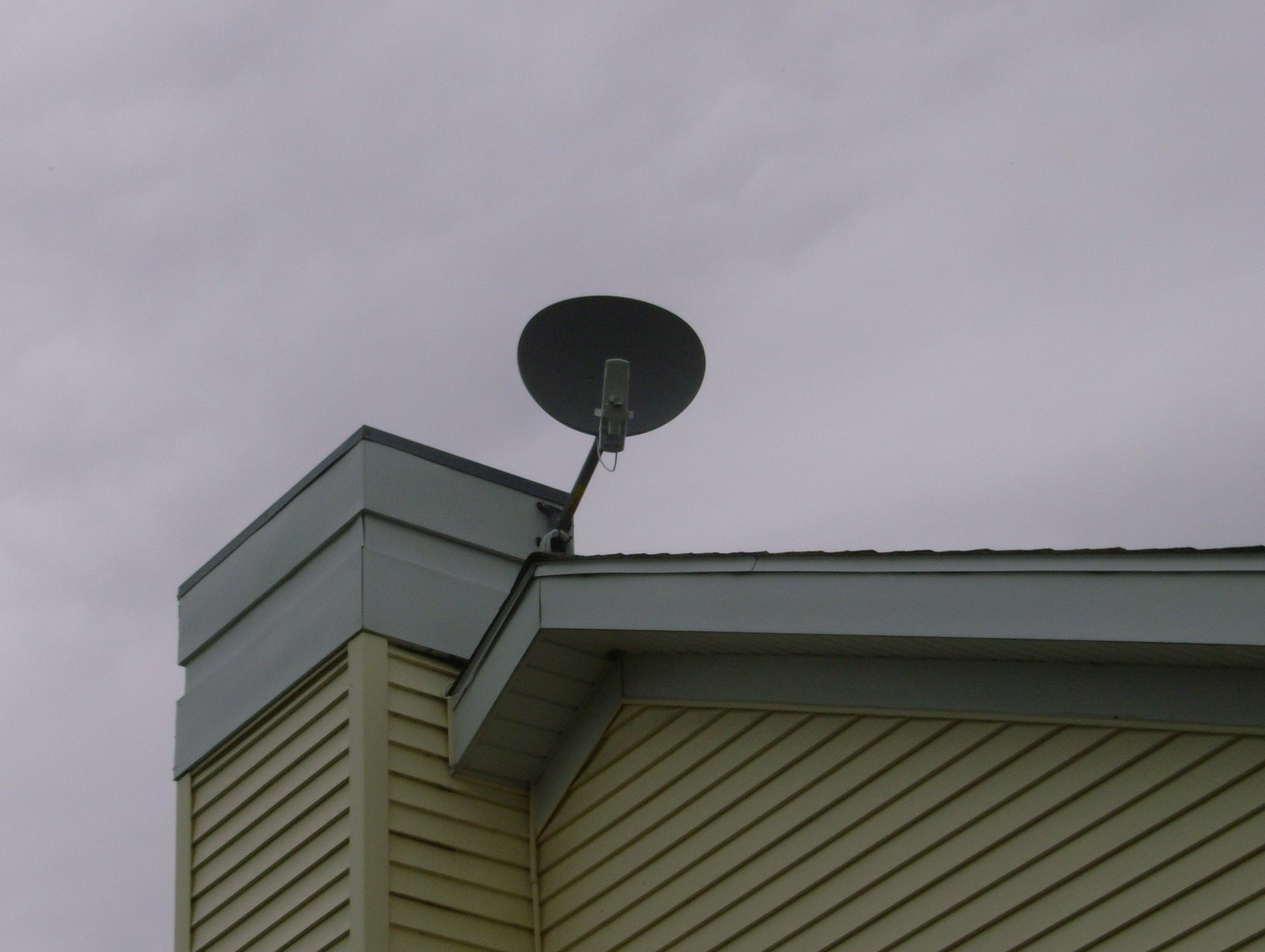
Motorola Canopy arrived as one coherent program, with hardware, management, and a repeatable install. It cost more than what people were used to, and operators grumbled plenty about that, but almost nobody grumbled about what it did. GPS sync meant you could stack sectors on a tower, or sit next to another operator, without tearing each other apart. That was the unlock, and that's what made point-to-multipoint a business instead of an experiment. The reflector dish, meanwhile, confused customers endlessly, and I can't count how many times someone called convinced we'd mounted their satellite dish upside down.
Then 2006 brought Orthogon Systems, and with it point-to-point links that shouldn't have worked but did. The PTP 300, 400, 500 and 600 families promised five nines of availability through non-line-of-sight, over water, across open terrain, in a market where ninety-five percent was considered respectable. You'd light a link through obstruction and multipath and not quite believe the numbers coming back.
By 2011, Motorola Solutions was done. Vector Capital bought Motorola Canopy and Orthogon, and on October 27, 2011, Cambium Networks existed. Motorola Canopy became PMP and Orthogon became PTP, and the new company inherited something it hadn't created, which was Ubiquiti (NYSE: UI). Ubiquiti entered while Motorola Canopy still wore the Motorola badge, and the pitch was brutally simple: cheap radios, no licensing, no recurring support fees. Cambium never solved that. It wasn't a Cambium-era failure, it was the founding condition.
Where did the company go looking for higher ground?
The Cambium years were a search for a defensible position. Enterprise Wi-Fi was the big bet, and Xirrus came over from Riverbed in July 2019, the same year the company went public and raised seventy million dollars. WISPA members voted them Manufacturer of the Year four straight times, 2017 through 2020. From the outside, it looked like a company arriving.
They also built something genuinely ahead of the field. cnMaestro gave operators free cloud management with no license, manage your network from anywhere, with cnMaestro X for paid features and a downloadable package if you wanted to run it on your own servers. Nobody else at that price point was close. It was revolutionary when it shipped and it's still doing real work today. In 2020 came Terragraph, the 60 GHz bet developed with Facebook.
But enterprise never landed at scale, and the squeeze arrived from both directions. From below, private LTE and private 5G took the use cases that needed mobility, the handhelds and tablets and anything that moves, while Cambium's answer still meant a fixed outdoor install with a fixed antenna. From above came Tarana, which over roughly the last three or four years went straight at the installed base with throughput, capacity, and latency that made the comparison uncomfortable, and without the line-of-sight discipline everyone had accepted as the cost of doing business. WISPs who'd run Cambium for a decade started swapping.
The quiet tragedy is in the roadmap. The strongest thing this company ever built was point-to-point, and the PTP 650 was the one: wideband 4.9 to 6.05 GHz, 450 Mbps aggregate in a 45 MHz channel, sold with a money-back guarantee that it would meet expectations. That kind of confidence gets earned, not marketed. It's end-of-life now, and so is its successor, the 670. Meanwhile the investment went sideways into 60 GHz multipoint, chasing ground Tarana was already taking with more range and fewer line-of-sight constraints. Terragraph wasn't bad technology, it was late, and aimed at a problem someone else was solving faster. The crown jewel aged out while the company built the future somewhere else.
Where do you go Monday morning?
You've got radios in the air and no vendor behind them, so here is the honest landscape, in no particular order.
CBRS and point-to-multipoint
This is the hard one, and I'm not going to pretend otherwise, because the bench is thin. Tarana is the performance leader with the G1, and the Tarana G2 coming looks strong. After that it gets uncomfortable. Baicells makes good equipment at a good price, but Chinese manufacturing has drawn enough scrutiny that a lot of operators, especially anyone touching government or critical infrastructure, won't go near it regardless of the specs. Telrad and BEC Technologies are real, and BEC has CPE if you're assembling a network piece by piece, but neither has much North American deployment footprint, which means few peers who've already solved your problem.
So if you're in CBRS, you're not really choosing between alternatives. You're choosing Tarana, or you're reconsidering the architecture, and reconsidering might be the actual answer. If the fixed point-to-multipoint bench is this thin, maybe the forced upgrade is the moment to stop replacing one fixed PMP radio with another and look hard at private LTE and private 5G. Same spectrum, standards-based gear from multiple vendors, a real ecosystem, and devices that aren't bolted to a rooftop. That's an architecture with a future, rather than a like-for-like swap into your next single-vendor dependency.
Point-to-point
Consolidation already thinned this field before any of this happened, so look at Ceragon, which now includes Siklu, along with Aviat and RADWIN. You'll pay more than you did for a 650, and you'll miss it.
60 GHz and Terragraph
You're in better shape than you think, and I'll come back to why. RADWIN ships a 60 GHz mmWave mesh, Edgecore does Terragraph alongside OpenWiFi and OpenLAN switching, Siklu is now part of Ceragon, and Altowav is out there doing something similar, though proprietary.
Enterprise Wi-Fi
Migration is the easy part, because Wi-Fi moves between vendors better than anything else in this list. Matching Cambium's feature-per-dollar is the hard part, there isn't much wiggle room, and you'll feel it in the quote.
The second question
Whatever you're evaluating, ask one more thing: what happens to me if you're next? That question would have been dismissed as paranoid eighteen months ago and it isn't anymore. Put lock-in risk on the scorecard next to throughput and price, and make vendors answer for it.
What's the irony nobody names?
Motorola Canopy ran in unlicensed spectrum, free and open and anybody's to use, and it locked you in completely, because the protocol on top of that open spectrum was entirely proprietary. Buy Motorola Canopy and you bought Motorola Canopy's world, end to end. That transferred straight into Cambium. You couldn't mix and match, and you couldn't swap a sector for someone else's sector. Open spectrum, closed system.
Standard Wi-Fi protocols were the open alternative, and they simply couldn't do what Motorola Canopy did at scale, so we all made the trade knowingly, and it was worth it at the time. It's the bill for that trade that's coming due right now. It's also why the operators with Terragraph in the air have options the PMP operators don't, not because the hardware is better, but because somebody built an open layer underneath it.
Could this end differently?
A lot of the municipal and outdoor networks built on this gear share the same two-part shape, Terragraph for backhaul and Wi-Fi for access. I've designed and deployed exactly that architecture, including a downtown municipal network in Alaska that carries a seasonal visitor load several times the size of the resident population. Same pattern, different scale, all over the country. The interesting part is that those two halves are in completely different positions right now.
The Terragraph half is already safe in principle. The entire stack lives at Linux Foundation Connectivity as open source, with kernel drivers, user space components, cloud software, and the network management subsystem. Meta contributed the specs and worked with silicon vendors precisely so no single OEM would own it, and that work was done years ago by people who saw this exact failure mode coming.
The Wi-Fi half doesn't have that yet, but it easily could. OpenWiFi came out of the same Telecom Infra Project that produced Terragraph, same parent and same philosophy, and the entire premise was this scenario: if your vendor goes dark, you reflash the hardware and manage it with something else. You don't lose the network because you lost the company. I worked on OpenWiFi at Meta as a Connectivity Technology Manager, and it wasn't a hypothetical then, and it isn't now.
So here's the ask, to whoever ends up holding these assets and to the engineers who built them. Release it. Open cnMaestro, or bless an OpenWiFi load for the access points. cnMaestro deserves better than to go dark, being free cloud management, self-hostable, and genuinely ahead of its time, and it would be an extraordinary waste for that engineering to become a dead certificate authority while the radios it managed keep working perfectly on poles and towers around the world.
Understand what the alternative means, because it means forklifts. It means municipalities and school districts and tribal networks that scraped funding together tearing down networks that work fine, because the controller went away.
Public infrastructure investment shouldn't have a shorter service life than the light poles it's mounted on.
For a buyer, opening the management layer isn't charity, it's the thing that keeps an installed base alive and worth owning. A dead controller means a migrated customer. An open one means a customer who stays. And the people who can actually make this happen are, as of this week, free to do it. That's the strange gift in all of this.
What if you're one of the people who built this?
From everything I can tell, this wasn't an engineering failure. The products were good, and I don't know a single person who used them and came away unhappy, from the Wi-Fi all the way up through point-to-point. The talent was real. The company had the products, the people, and the services, it just never got over the hump on market viability, and the folks who did the work are paying for decisions they didn't make.
The shutdown itself creates demand for exactly your knowledge. Every municipality, military site, government buyer, and enterprise with this gear in the air just lost their support path, and they can't call the vendor anymore. They need people who can answer without opening a ticket, for the next three to five years minimum. That's a real practice, not a consolation prize, and independent support and migration advisory for orphaned Cambium estates is a business somebody is going to build.
The channel is hiring whether it knows it yet or not. Distributors who sold this for years have customers calling Monday morning and no factory behind them, and a field SE or product manager who knows this gear solves that problem the day they walk in. Same for the VARs. The Cambium case studies are a public map of who deployed what, so work backwards from them, and if anyone inside still has the ability to share a distributor or key-customer list on the way out, that would be a genuine kindness. Competing manufacturers will be hiring too, for obvious reasons.
One caution there, and I'm not a lawyer: confidentiality obligations generally don't evaporate when a company stops operating, and they often transfer to whoever acquires the assets, so even in a shutdown, assume your NDA may still stand. Be upfront with prospective employers about what you're bound by, because they have counsel and they'll tell you what they can and can't do with you. I posted an offer to connect people on LinkedIn and picked up forty or fifty new connections almost immediately. The industry is already catching people, so let it catch you.
Do this
- If you have Cambium in the air, don't panic-forklift. Inventory your spares, document your configs, and export whatever you can from cnMaestro while it's still reachable.
- Make lock-in risk a line item on your vendor scorecard, and ask every vendor on your shortlist what happens to you if they're next.
- If you're in CBRS, look hard at Tarana, and look just as hard at whether private LTE or 5G is the better answer to the question you were actually asking.
- If you run Terragraph, go look at Linux Foundation Connectivity, because TIP already did the work.
- If you're in the channel, hire these people, because they're the only ones who can answer your customers now.
- If you're holding the assets, open the management layer. You'll be remembered for it, and it's the commercially smarter move besides.
Tomorrow morning, every Cambium radio on every tower and light pole on earth is going to wake up and do its job. They'll pass traffic they were configured to pass, hold links they were aimed to hold, and serve clients who will never once think about who manufactured them. The hardware is fine. The hardware was always fine.
What's at risk isn't the network, it's the ability to manage the network, and that's a software problem. Software problems have solutions, when somebody decides to open the door on the way out rather than pulling it shut behind them. Cambium had the products, the people, and the services, four straight years as the operators' favorite manufacturer, every advantage, and it still couldn't get over the hump. That's a hard thing to watch happen to a company full of people who did good work.
But the work doesn't have to go down with the company. Terragraph already proved that, because it's open since somebody chose to make it open, years before anybody needed it to be, and OpenWiFi is sitting right there waiting to do the same job for the access layer. The code exists, the community exists, and the people who know how to do it just got handed a great deal of free time. Open it up. Let the work outlive the company.
Want this kind of thing weekly, in audio? That's the show.